Documentation Index

Fetch the complete documentation index at: https://docs.mkt-viper.com/llms.txt

Use this file to discover all available pages before exploring further.

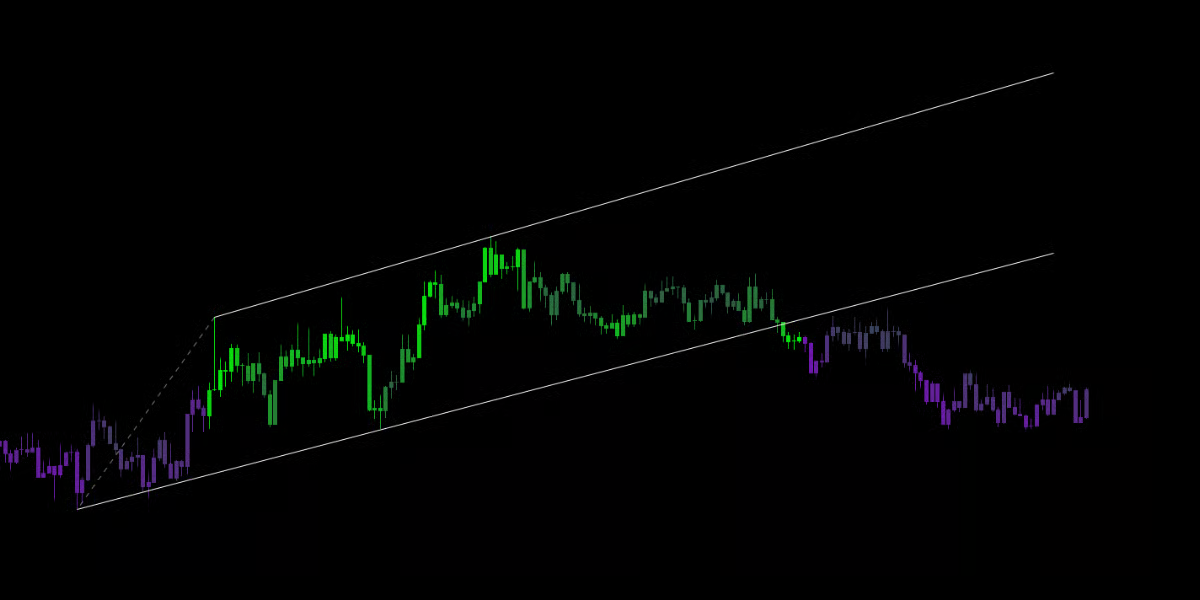
Classic chart patterns like Wedges, Channels and Triangles are the bedrock of technical analysis, but identifying them in real-time can be subjective and tedious. The Viper Pattern Engine automates this process. Using a proprietary “Vertex Finder” algorithm, it scans the market geometry to detect high-probability breakout structures. Image

Supported Structures

The engine automatically detects and labels the following geometric structures:

🔹 Wedges (Reversal)

  • Falling Wedge: A structure with lower highs and lower lows contracting into a point.
    • Bias: Bullish. Usually breaks to the upside.
  • Rising Wedge: A structure with higher highs and higher lows contracting into a point.
    • Bias: Bearish. Usually breaks to the downside.

🔹 Triangles (Continuation)

  • Symmetrical Triangle: Price compressing with lower highs and higher lows.
    • Bias: Neutral. Represents a “coiling” of energy before a massive expansion in either direction.

🔹 Channels (Trend)

  • Parallel Channel: Price bouncing between two parallel trendlines.
    • Strategy: Trade the bounces. Buy at the bottom line, Sell at the top line.

🔹 Expanding (Volatility)

  • Broadening Wedge: The opposite of a triangle. Highs get higher and lows get lower.
    • Bias: High Volatility / Confusion. Represents increasing market instability.
Strategy: The Breakout & RetestThe Auto Chart Patterns are designed to catch explosive moves.
  1. Wait for the Break: Do not predict the breakout. Wait for a candle to close outside the pattern lines.
  2. The Alert: You can enable the “Alert: Chart Pattern Breakout” setting to get a notification the moment price escapes the structure.
  3. The Retest (Safe Entry): Aggressive traders enter on the break. Conservative traders wait for price to break out, come back to touch the line (Retest), and bounce. This offers a safer entry with a tighter stop loss.